 Français
 Español
 Portugais


 English GB


Retrouvez tous les modèles de David Weber prêt à coller !


Retrouvez tous les modèles de David Weber prêt à coller !
Performance, lightness and strength for your composite creations.
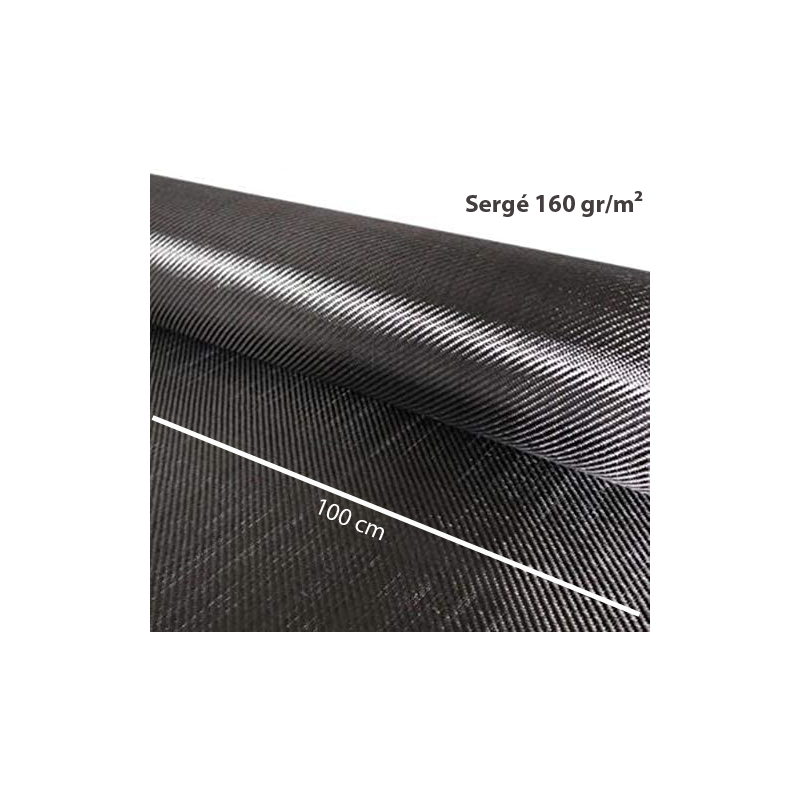
This 160 g/m² 3K Twill Carbon Fibre fabric is ideal for manufacturing and reinforcing composite parts requiring an excellent weight/strength ratio.
Its twill weave (2/2) offers excellent flexibility and a good ability to conform to shapes and curves, thus facilitating its application on complex surfaces.
Its weight of 160 g/m² allows for lightweight laminations while benefiting from the excellent mechanical properties of carbon fiber.
With its width of 100 cm, it is particularly suitable for the manufacture of surfboards, foil boards, foil wings, nautical equipment and other technical parts in composite materials.
3K carbon fiber: 3,000 filaments per strand, for a regular weave and an aesthetic finish characteristic of carbon.
Twill weave: soft and easy to drape, ideal for conforming to shapes and curved surfaces.
Weight 160 g/m²: an excellent compromise between lightness and mechanical reinforcement.
Width 100 cm: practical for making pieces of different dimensions.
Versatility: compatible with vacuum or contact lamination processes, with suitable resin systems.
This carbon fabric is particularly recommended for:
The manufacture and reinforcement of surfboards.
The manufacture of wingfoil and kitesurfing boards.
The production of foil boards and components.
The reinforcement of hulls and nautical equipment.
The manufacture of lightweight and strong composite parts.
Carbon construction and repair projects.
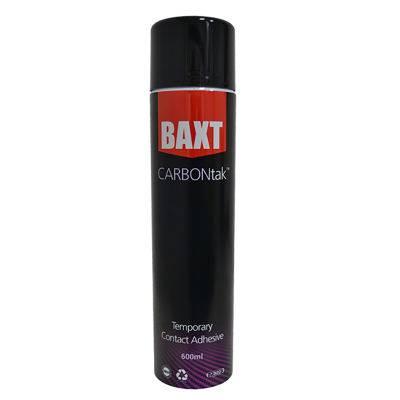
A high-performance temporary fixing, specially designed for the implementation of carbon fibers.
CARBONtak™ is a high-performance aerosol adhesive that temporarily holds lightweight carbon fibers in place during the manufacturing of composite parts. It is particularly well-suited for producing natural-looking, unpainted carbon parts manufactured using the vacuum bagging process.
It ensures effective support of the fibers during the various preparation and implementation stages, while facilitating their positioning before impregnation with the resin.